Home / News / The Voting Rights Act Is Still Law. Here's What the Supreme Court Just Changed.
The Voting Rights Act Is Still Law. Here's What the Supreme Court Just Changed.
The Supreme Court did not strike down the Voting Rights Act. It changed what you have to prove to use it. That distinction is small on paper and enormous in practice.
Last updated: May 1, 2026
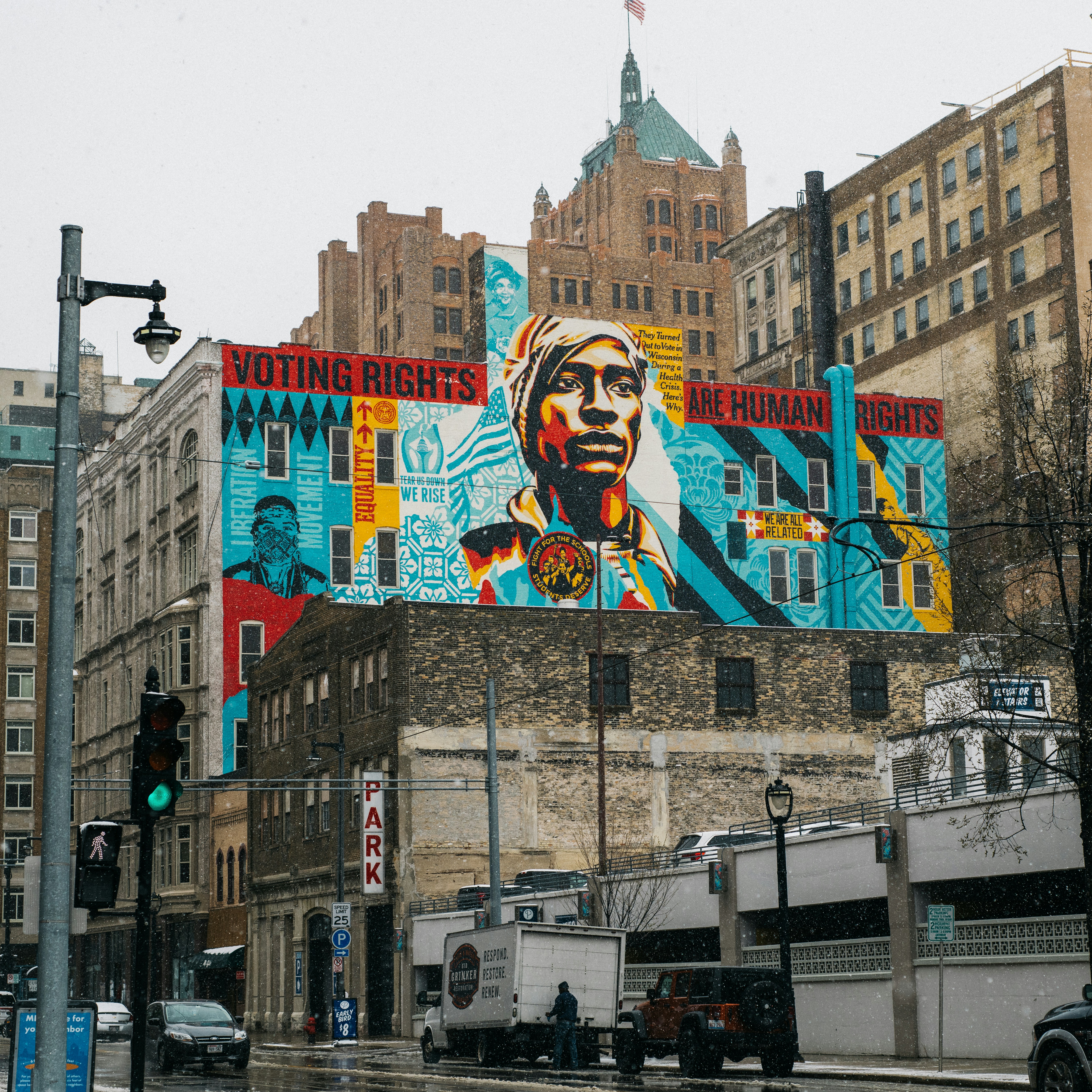
On April 29, 2026, the Supreme Court ruled 6 to 3 in a case called Louisiana v. Callais. Most of the headlines say the Court "gutted" the Voting Rights Act. The law is still on the books. What changed is the rule for how you win a case under it. Below is a walkthrough of how we got here and what shifts now, with the 2026 midterms six months away.
What the Voting Rights Act Does
Congress passed the Voting Rights Act in 1965. It was a response to states, mostly in the South, that had spent the previous century blocking Black Americans from voting through tactics like literacy tests, poll taxes, rigged registration rules, and outright intimidation. The law made those tactics illegal nationwide and gave the federal government tools to enforce that.
The Act has multiple sections. Two have done most of the heavy lifting:
Section 2 (the section in the news)
Bans any voting rule, anywhere in the country, that weakens the voting power of a racial or language minority group. It is the section most often used to challenge congressional maps that pack or split minority voters. This is the section the Court just changed.
Section 5 (mostly inactive since 2013)
Required certain states with a history of discrimination to get federal approval before changing any voting rule. In Shelby County v. Holder (2013), the Supreme Court struck down the formula that decided which states had to comply. Section 5 is technically still law, but with no formula to enforce it, it has not been used in over a decade.
The Louisiana Case, Step by Step
The case landed at the Supreme Court after years of court fights over a single congressional map. Here it is in order:
-
2020
The U.S. Census happens, as it does every ten years. States use the new population counts to redraw their congressional districts.
-
2022
Louisiana draws a new map with one majority-Black district out of six, even though Black residents make up about a third of the state's population. Civil rights groups sue under Section 2. A federal court agrees the map likely violates the law and orders Louisiana to draw a new one.
-
January 2024
Louisiana passes SB8, a new map with two majority-Black districts. The new district runs from Baton Rouge up to Shreveport in the northwest corner of the state.
-
Later in 2024
A different group of voters, who are not Black, sues over SB8. They argue Louisiana relied too much on race when drawing the new district, which would make it an unconstitutional racial gerrymander. That case is Louisiana v. Callais.
-
April 29, 2026
The Supreme Court rules 6 to 3 against Louisiana. Justice Samuel Alito writes for the majority. The SB8 map is struck down. Louisiana has to draw a third map.
What the Court Changed
For about forty years, plaintiffs could win a Section 2 case by showing that a map's effects hurt minority voters. They did not have to prove anyone in the legislature wanted that outcome. Lawyers called it the "results test." Congress wrote it into the law in 1982 on purpose, because proving what is in a politician's head is nearly impossible.
The Callais ruling moves the standard much closer to intent. Alito wrote that liability under Section 2 should require "a strong inference that intentional discrimination occurred." Showing the map harms Black voters is no longer enough. You also have to convince a court that the legislature meant to harm them.
Justice Elena Kagan, joined in dissent by Justices Sotomayor and Jackson, wrote that the ruling renders the Voting Rights Act "all but a dead letter." She argued the majority changed the test Congress wrote and left states free to dilute minority voting power without legal consequence.
This is the third major Voting Rights Act ruling in just over a decade. Shelby County (2013) ended Section 5 enforcement. Brnovich v. DNC (2021) raised the bar for Section 2 challenges to voting rules like ballot collection limits. Callais raises the bar again, this time for redistricting maps. The pattern is consistent.
What's Already Moving
Other states moved within hours.
Florida
On the same day as the ruling, both chambers of the Florida legislature passed a new congressional map (House 83-28, Senate 21-17). The new lines are projected to flip the state's House delegation from a 20-8 Republican majority to roughly 24-4. Reps. Kathy Castor, Darren Soto, Jared Moskowitz, Debbie Wasserman Schultz, and Lois Frankel are the Democrats most at risk.
Alabama
On May 1, Alabama's attorney general filed emergency motions to lift court orders that had been protecting majority-Black districts in three pending cases. Mississippi, Tennessee, South Carolina, and Georgia are reportedly weighing special legislative sessions or fresh court challenges to do something similar.
Louisiana
The state suspended its May 16 primary the day after the ruling. The legislature now has to draw a third map in five years. Some early and overseas ballots had already been mailed under the SB8 lines. There is no rescheduled primary date yet.
Pending Section 2 lawsuits
At least 28 active Voting Rights Act lawsuits across Georgia, Louisiana, Alabama, Mississippi, North Carolina, and Texas are now affected by the new standard, according to research by Democracy Docket. Some will likely be dropped. Others will continue under the harder bar.
Voting rights groups have offered estimates for what this could mean once new maps are drawn. Up to 19 Southern congressional seats currently held by minority candidates could be redrawn into districts where minority voters no longer have the power to elect their preferred candidate. NPR puts the number of seats currently held by Black members of Congress that could change hands at around 15.
Why This Matters for the Midterms
The U.S. House is currently decided by margins of fewer than ten seats. The party in charge picks every committee chair and decides which bills get a floor vote. A redistricting wave that nets Republicans a dozen seats from minority districts could be the difference between a Democratic House and a Republican one in 2027, regardless of how the voters in those states cast their ballots.
There is a takeaway here that does not require picking a side. People are working very hard at the highest court in the country to control which voters get sorted into which districts. They would not bother if votes did not move power. They are doing this because votes do.
Frequently Asked Questions
Is the Voting Rights Act still law?
Yes. The Court did not strike down Section 2 or the Voting Rights Act. It changed how courts must apply Section 2 when deciding cases. The text of the law is unchanged. What changed is how much you have to prove to win.
Can Louisiana appeal?
No. The Supreme Court is the final stop for federal cases. Louisiana now has to draw a new map. The civil rights groups who originally sued can challenge the next map under the new standard, but proving intent is much harder than proving effects.
What is the difference between racial and partisan gerrymandering?
Racial gerrymandering uses race to draw district lines and has been illegal under federal law for decades. Partisan gerrymandering uses politics to draw lines, and the Supreme Court has said federal courts cannot stop it. The line between the two has always been blurry, because in many states race and party vote almost identically. Callais makes that line even harder to draw.
Could Congress fix this?
In theory, yes. Congress could pass a new law that restores the results test or rebuilds Section 5's coverage formula. The John R. Lewis Voting Rights Advancement Act has been introduced in past sessions to do exactly that. None of those efforts have made it through the Senate so far.
What if I live in Louisiana or Florida?
Your district lines may change before November. Check your Secretary of State's website for the current district closer to the election. If you live in Louisiana, watch for news about when the May 16 primary will be rescheduled.
Keep Reading
Issue Explainer
Supreme Court Redistricting 2026: Texas and Virginia
Two redistricting rulings on the same day in April could swing nine House seats.
Explainer
How Redistricting Works
How district lines get drawn, who has the pen, why both parties spend so much fighting over it, and what changed after the 2020 census.
Tool
2026 Election Calendar
Primary dates and registration deadlines for every state. Check yours.
Reference
Glossary
Definitions for the terms you'll keep seeing in coverage of this ruling.
Glossary
4 terms on this page
An official written opinion from a judge or judges who disagree with the majority ruling.
Drawing district lines to give one party an unfair advantage.
Redrawing the boundaries of congressional and legislative districts.
The highest court in the U.S., with 9 justices who serve lifetime appointments.
Glossary
4 terms on this page
An official written opinion from a judge or judges who disagree with the majority ruling.
Drawing district lines to give one party an unfair advantage.
Redrawing the boundaries of congressional and legislative districts.
The highest court in the U.S., with 9 justices who serve lifetime appointments.