Candidates / Guy Reschenthaler
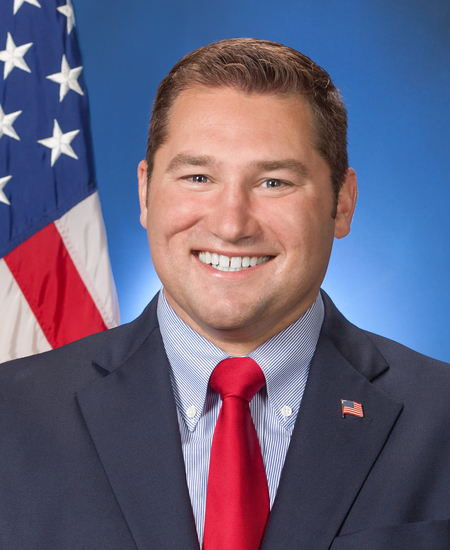
Guy Reschenthaler
Guy Reschenthaler is a Republican U.S. Representative representing Pennsylvania's 14th District, in office since 2019, and is running for re-election in 2026. Reschenthaler advanced to the general election. Reschenthaler has raised $3.1M this cycle, with 69% from individual donors, according to FEC filings. Forecasters rate the race Safe R.
Sign in to build your 2026 Pennsylvania ballot — track your picks across every race.
Fundraising Snapshot
$3.1M
Total Contributions
$3.4M
Spent
$739K
Cash on Hand
$502K
Transfers In
Where the money comes from
Donation sizes
In-state vs out-of-state
What do these terms mean?
- Total Contributions — Money contributed directly by individuals, PACs, and party committees.
- Individual — Contributions from individual people, including small-dollar donations under $200.
- PAC — Contributions from Political Action Committees (organizations that pool donations).
- Party — Contributions from Democratic or Republican party committees.
- Other — Remaining contributions not categorized above.
- Transfers In — Money moved from the candidate's other campaign committees (e.g., a House campaign fund transferred to a Senate campaign). Not a new contribution.
Also in this race
Voting Scorecard
View full scorecard →91%
Participation
97%
Party Loyalty
1
Broke with Party
100%
Bipartisan Rate
Based on 35 tracked bills, 32 votes cast
How They Voted (33) · view key votes
Authorizes continued U.S. support for Ukraine. Taken the day after the Iran war powers vote, it puts members on record on the other major foreign conflict heading into the primaries.
A companion measure directing the removal of U.S. forces from Lebanon, rejected the day after the Iran resolution passed.
Iran War Powers 2026
A series of votes over three months on whether to direct the President to end U.S. military involvement in hostilities with Iran. The House rejected the measure three times (March, April, May) before passing it in June; the Senate forced a companion resolution out of committee in May. The arc shows where each member stood as the conflict continued.
Directs the President to end U.S. military involvement in hostilities with Iran unless Congress votes to authorize them. The House passed it 215–208, with four Republicans joining all Democrats. This type of resolution does not go to the President's desk and is generally considered non-binding, but it puts every House member on the record about the war.
The second House attempt to direct an end to hostilities with Iran, which also failed. Together with the April and June votes, this creates a three-vote timeline of where each member stood as the war went on.
An earlier version directing the President to remove U.S. forces from hostilities with Iran. It failed in April before a later version passed in June — useful for showing which members changed their vote as the war continued.
This resolution invoked the War Powers Act of 1973 — a law passed after Vietnam specifically to prevent presidents from taking the country to war without Congress's approval. It was introduced by Rep. Ro Khanna (D) and Rep. Thomas Massie (R) — a rare bipartisan pairing — after President Trump authorized military strikes on Iran, including attacks on nuclear facilities, without a formal congressional declaration of war. Six U.S. service members were killed in a retaliatory drone strike in Kuwait. The resolution would have required Trump to halt further military action unless Congress formally authorized it. It failed 212–219, with four Democrats voting against it and only two Republicans voting for it. A YEA vote meant: Congress, not the President, decides when we go to war. A NAY vote meant: the President has the authority to continue without asking.
Increases certain veterans disability compensation payments.
Prohibits the VA from reporting veterans to the federal gun background check system solely because a fiduciary manages their benefits, unless a judge rules they are a danger to themselves or others.
A broadly bipartisan bill aimed at increasing the supply of housing in the U.S. The Senate passed it 89–10 in March; the House agreed with changes in May. One of the few major bipartisan economic bills of the year, at a time when housing costs are a top voter concern.
Requires public elementary and middle schools that receive federal funds to get parental consent before changing a student's gender markers, pronouns, or preferred name on school forms, or changing sex-based accommodations such as locker rooms or bathrooms.
Makes year-round sales of E15 ethanol-blend gasoline permanent.
Creates a coordinated federal response to organized retail theft.
Extends the federal government's authority to collect communications of foreign targets without a warrant under Section 702 of the Foreign Intelligence Surveillance Act — a program that can also sweep in Americans' communications. Signed into law (P.L. 119-87).
A five-year renewal of farm and food programs, including crop supports and nutrition assistance.
Sets Congress's overall budget plan for fiscal year 2026 and spending levels through 2035. A budget resolution is a blueprint, not a spending law, but it unlocks the reconciliation process that lets the majority pass certain bills with a simple Senate majority.
To require the Secretary of Homeland Security to designate Haiti for temporary protected status
Guarantees pay for DHS personnel during funding lapses.
Makes non-citizens who have been convicted of defrauding the U.S. government or unlawfully receiving public benefits deportable and inadmissible.
A proposed constitutional amendment requiring the federal government to balance its budget each year. Constitutional amendments need a two-thirds vote in each chamber; this fell short.
Epstein Files Transparency ActThis bill requires the Department of Justice (DOJ) to publish (in a searchable and downloadable format) all unclassified records, documents, communications, and investigative materials in DOJ's possession that relate to the investigation and prosecution of Jeffrey Epstein.This includes (1) materials that relate to Ghislaine Maxwell, (2) flight logs and travel records, and (3) individuals named or referenced (including government officials) in connection with the investigation and prosecution of Jeffrey Epstein.DOJ is permitted to withhold certain information such as the personal information of victims and materials that would jeopardize an active federal investigation.Additionally, not later than 15 days after the required publication, DOJ must report to Congress (1) all categories of information released and withheld, (2) a summary of any redactions made, and (3) a list of all government officials and politically exposed individuals named or referenced in the published materials.
Temporarily reopened the government after a 6-week shutdown in late 2025. Passed 217-212 in the House.
Cut $9.4 billion in already-approved spending — $8.3B from foreign aid and $1.1B from public broadcasting. Codified DOGE's proposed cuts into law. Passed 214-212.
Moves crypto regulation from the SEC to the CFTC, a smaller agency seen as more industry-friendly. Bans a government-issued digital dollar and requires exchanges to keep customer funds separate. Passed the House only.
Massive reconciliation bill making Trump-era tax cuts permanent, raising the debt ceiling by $5 trillion, and cutting Medicaid. Passed by 1 vote in both chambers (215-214 House, 51-50 Senate with VP tiebreaker).
Kept the government funded temporarily after Congress couldn't agree on a full budget. Passed 217-213 in the House.
The full federal budget for 2026. Passed by razor-thin margins after months of shutdowns and stopgap bills. The full federal budget for 2026. Passed by razor-thin margins after months of shutdowns and stopgap bills.
This bill was introduced after President Biden delayed a shipment of heavy bombs to Israel, citing concerns about their potential use in a densely populated area of Rafah, Gaza. The bill would have prohibited any federal funds from being used to pause, withhold, or cancel weapons deliveries to Israel — essentially stripping the President's ability to use arms transfers as diplomatic leverage. It would also have blocked the salaries of any Defense Department or State Department employees involved in delaying those deliveries. Supporters argued the U.S. should honor its commitments to an ally without conditions. Opponents argued Congress should not remove the executive branch's ability to apply pressure on a foreign government's military conduct. A NAY vote meant siding with the President's authority to pause weapons if he judged it necessary.
April 2024 National Security Package
A four-bill legislative package providing aid to Ukraine, Israel, and Taiwan, along with additional national security measures including a potential TikTok ban.
This included about $50.7 billion for defense and nuclear protection, $9.6 billion for economic support and diplomacy, and $481 million for refugee assistance for Ukrainians fleeing the conflict. More specifically: the bill provided over $7.8 billion in Economic Support Funds and nearly $1.6 billion in Foreign Military Financing for Ukraine and impacted countries, and increased the President's drawdown authority for Ukraine from $100 million to $7.8 billion. It also allowed for the cancellation of up to 50% of Ukraine's debt related to the economic assistance provided under the bill after November 2024, subject to congressional approval. A NAY vote meant opposing emergency military and economic assistance to Ukraine during its ongoing war with Russia.
This was a large foreign aid package that bundled together emergency funding for multiple countries and crises. It included $26.4 billion for Israel's military defense, including procurement of Iron Dome, David's Sling, and Iron Beam missile defense systems, as well as weapons replenishment. The same bill also included aid for Ukraine's defense against Russia, security assistance for Taiwan, and humanitarian relief for civilians in Gaza. Because it combined all of these priorities into one package, members who supported Ukraine aid or Gaza humanitarian relief had to accept the Israel military funding as part of the same vote — and vice versa. Supporters called it a necessary compromise given divided government. Critics on the left argued that bundling doesn't change the material outcome of sending weapons to Israel during an active military campaign in Gaza.
This included $3.3 billion for submarine infrastructure and development, $1.9 billion to replenish U.S. weapons provided to Taiwan and other regional allies, and $2 billion in Foreign Military Financing for Taiwan and other allies countering Chinese aggression. The bill also provided replacements or reimbursements for defense articles and services that the Department of Defense had already provided to Taiwan and countries that had supported Taiwan. Additionally, it included $250 million to the World Bank's International Development Association to provide rapid financing and grants to the poorest countries experiencing crises. A NAY vote meant opposing emergency funding to reinforce U.S. military presence and arm allies in the Indo-Pacific region, primarily in response to Chinese aggression toward Taiwan.
This bill was voted on the same day as H.R. 8034, H.R. 8035, and H.R. 8036 as part of the same legislative package. Unlike those three bills, H.R. 8038 did not appropriate money. Instead, it was a policy and sanctions bill covering several unrelated topics under one vote. It imposed sanctions on individuals and foreign governments involved in fentanyl trafficking, Iranian oil exports, Iranian missile programs, and support for Hamas and Palestinian Islamic Jihad. It authorized the President to seize certain Russian sovereign assets to fund reconstruction efforts in Ukraine. It required ByteDance — the China-based parent company of TikTok — to sell the platform to a non-Chinese owner or face a ban in the United States. It also prohibited data brokers from transferring sensitive personal data of U.S. individuals to foreign adversary countries. A NAY vote meant opposing a package of sanctions targeting Iran, Russia, and Hamas, as well as the requirement for ByteDance to divest from TikTok.
Strengthened checks on presidential power — limits emergency declarations, requires disclosure of foreign government contacts, and protects inspectors general and whistleblowers from retaliation.
Second article from the first impeachment (2019): obstruction of Congress for blocking witnesses and documents from the investigation.
Know this candidate?
Share their profile so voters in Pennsylvania can learn more.